You've decided to make better use of your outdoor space, but now comes the difficult part: choosing the right pergola. Should you opt for the timeless appeal of a traditional pergola, or invest in a louvre roof system that offers greater flexibility and control?
Both can transform the look and feel of your space, but they are built with different priorities in mind.
This louvre pergola vs standard pergola comparison looks at the key differences between the two, helping you choose a pergola that not only suits your home, but also delivers the quality, performance, and lasting value you expect from your outdoor space.
Louvre pergola vs standard pergola
Below, we compare the two across six key areas: light control, weather protection, materials, aesthetics, smart accessories, and cost.
Light control and ventilation
Start with light, since it's usually the first thing people notice. A traditional pergola works with fixed rafters or beams, spaced to let a certain amount of dappled light filter through.
Once it's built, the level of shade remains largely the same, regardless of the time of day or changing weather conditions.
Some homeowners like the simplicity of that. Others find, a few summers in, that a fixed structure eventually feels like it's working against the weather.
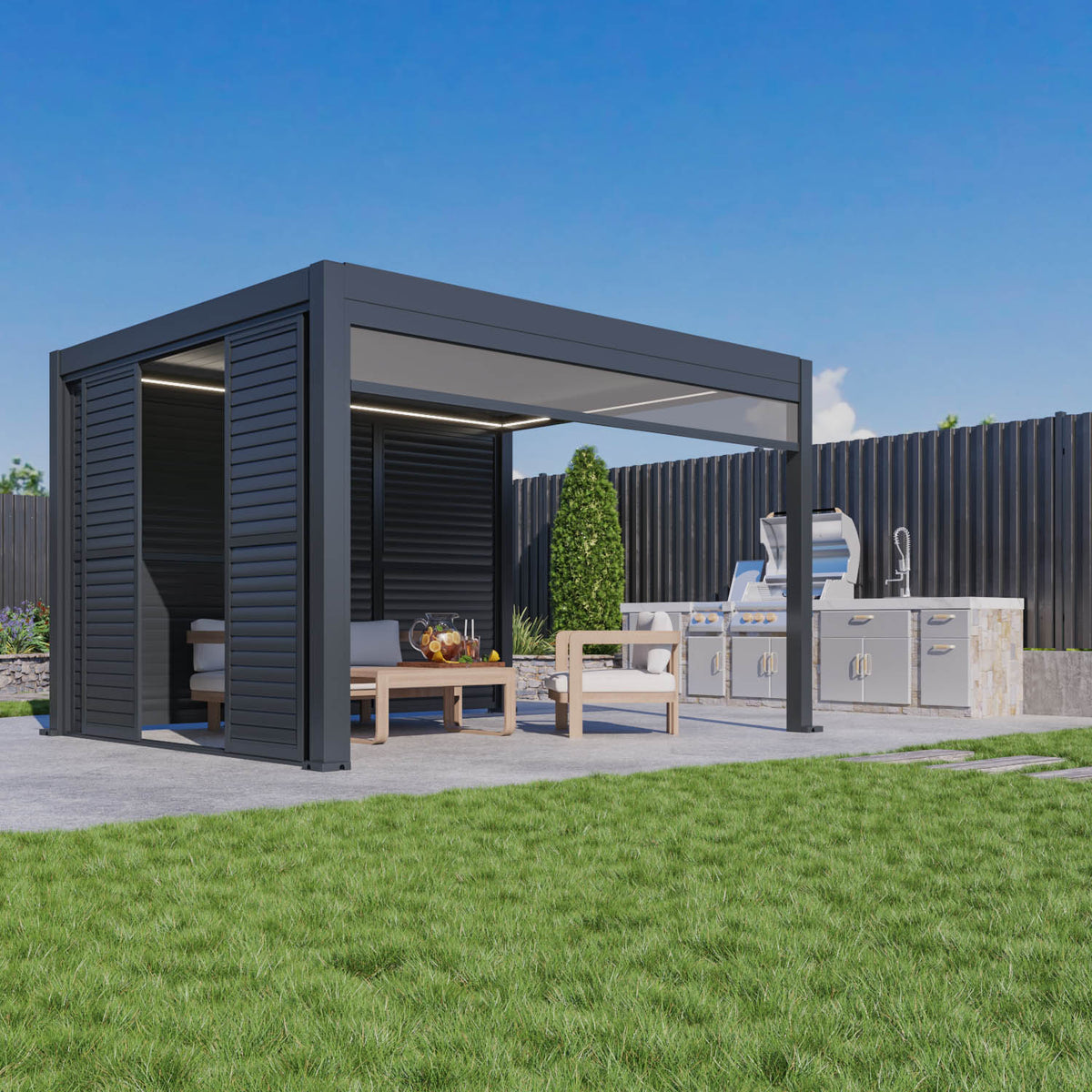
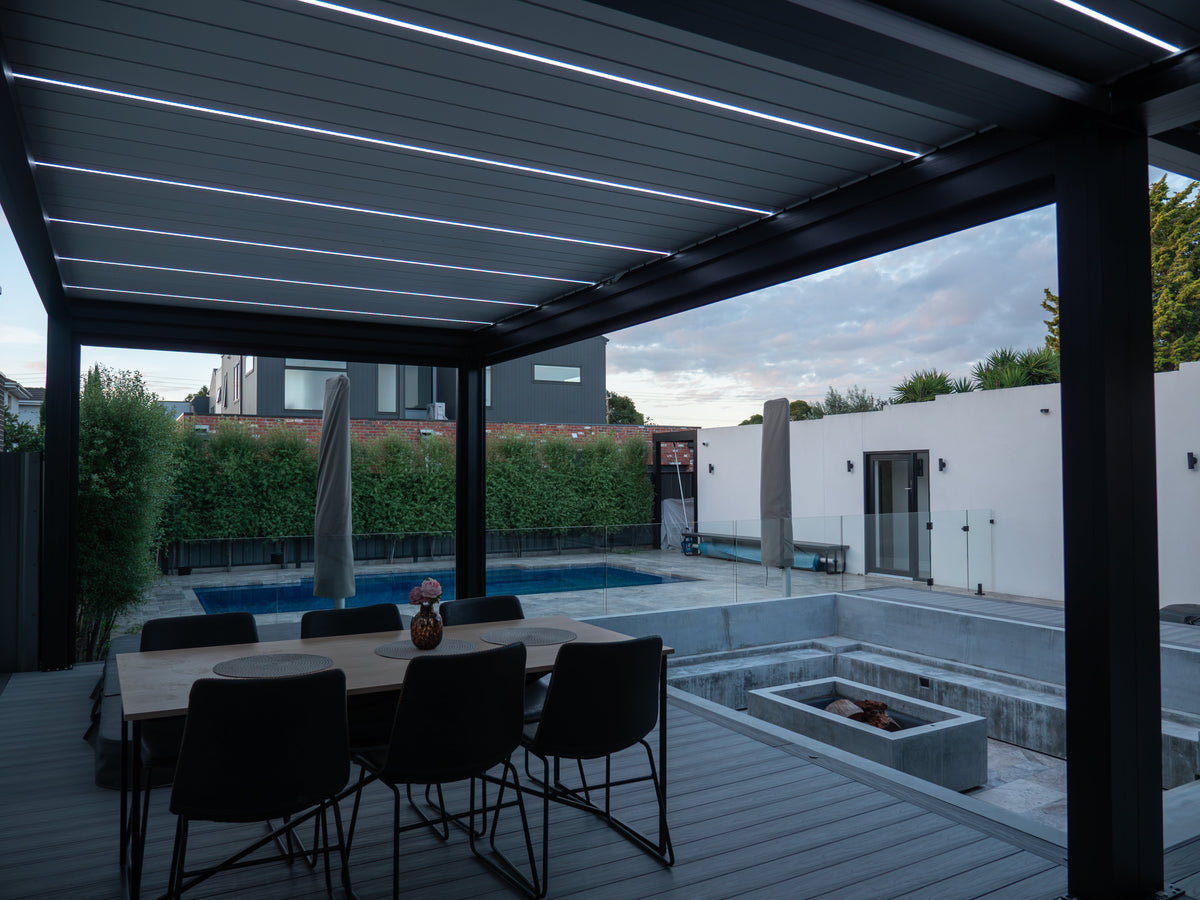
A louvre roof offers greater flexibility. Its individually rotating aluminium blades can be opened to let in more sunlight, angled to provide filtered shade, or closed to create a more sheltered space.
That allows you to adjust the amount of light and airflow throughout the day, rather than relying on a fixed level of shade.
If you want an outdoor space that can adapt to different conditions, a louvre roof gives you greater control over how the space feels and functions.
Weather protection
A traditional pergola is generally open by design, offering shade but limited protection from rain. When an unexpected downpour arrives, the space may no longer be practical for outdoor dining or entertaining.
A louvre roof provides greater protection by allowing the blades to close and create a more sheltered environment. When properly designed and installed, the roof can help keep rain out, allowing you to continue using the space when the weather changes.
If you're comparing a louvre roof vs pergola for weather protection, the added coverage of a louvre roof can make it a more versatile option for using your outdoor area in a wider range of conditions.
Materials and durability
Materials are where the pergola vs louvres comparison becomes most practical, since each option comes with different durability and maintenance requirements.
Traditional pergolas are often built from timber, which offers a warm, natural appearance that complements garden settings.
However, timber requires regular maintenance to help protect it from moisture, heat, and general weather exposure. Without proper care, it can become more vulnerable to issues such as warping, cracking, or rot over time.
Louvre roof systems, by comparison, are typically constructed using materials such as powder-coated aluminium, which offers a durable and low-maintenance alternative to timber.
Aluminium is resistant to corrosion and does not require the same level of ongoing treatment as natural wood.
If you prefer a modern structure that requires less upkeep while offering long-term durability, a louvre roof may be the more practical option.
Aesthetics
If you're comparing a louvre roof vs pergola for aesthetics, the right choice will largely depend on your home's architectural style.
Traditional pergolas have a natural charm that works well in established gardens, particularly around heritage homes or properties with a cottage-style aesthetic.
Louvre pergolas offer a more contemporary look, with clean lines and a streamlined architectural profile that complements modern homes and newer builds.
Accessory and smart home integration
The right accessories can make your outdoor space more comfortable and practical throughout the year. With a traditional pergola, adding features such as heaters and lighting may require separate fixtures or additional installation.
A louvre pergola offers greater integration, with features such as heating, lighting, privacy screens, and smart controls designed to work alongside the structure.
Depending on the system you choose, you can adjust these features to suit how you use the space, whether you're relaxing with family, enjoying a quiet evening outdoors, or creating a comfortable entertaining space.
If you want an outdoor space that feels as convenient and connected as the rest of your home, a louvre pergola gives you more flexibility to create the experience you want.
Upfront cost vs long-term value
Cost is the final factor to consider, but also one of the clearest differences in the louvres vs traditional pergola comparison.
Traditional pergolas tend to have a lower upfront cost, as their simpler design and fewer components make them less expensive to build and install.
If you want a straightforward garden feature on a modest budget, this can make a traditional pergola an appealing option.
A louvre pergola typically requires a higher initial investment, particularly with features such as aluminium construction, motorisation, and smart controls.
However, you also gain greater weather protection, year-round usability, low maintenance, and the flexibility to adjust the space to suit changing conditions.
If keeping upfront costs low is your priority, a traditional pergola may be the better fit. But if you want an outdoor space that offers greater flexibility, comfort, and usability throughout the year, a louvre pergola can provide greater value over time.
Ready for a louvre roof? Build with Aluvers
If the comparison above has you leaning towards a louvre system, our Aluvers team can help you explore the right solution for your home and outdoor space.
We design, build, and install architectural louvred pergolas across Melbourne, with a range of systems to suit different spaces and requirements, from the minimalist, manually operated Ibiza to the motorised Santorini and the premium Amalfi system with smart controls and integrated accessories.
Every system we install is designed for long-term performance in Melbourne's demanding conditions. That's why we use premium aluminium and steel, selecting materials that are built to provide lasting durability and reliable performance.
We take the same considered approach when it comes to the installation itself. Every project starts with a consultation at our Dandenong showroom or on-site, where we take the time to understand your home, your space, and how you want to use it.
Ready to explore your options? Visit our Dandenong showroom or speak with our team about the right louvre system for your space.